The journal · · 4 min
Birch for heat, fir for smoke: the woodshed, explained
The whole restaurant runs on two woods. Birch makes the coal bed that cooks; fir, added late and sparingly, is seasoning. Everything else stays in the forest.
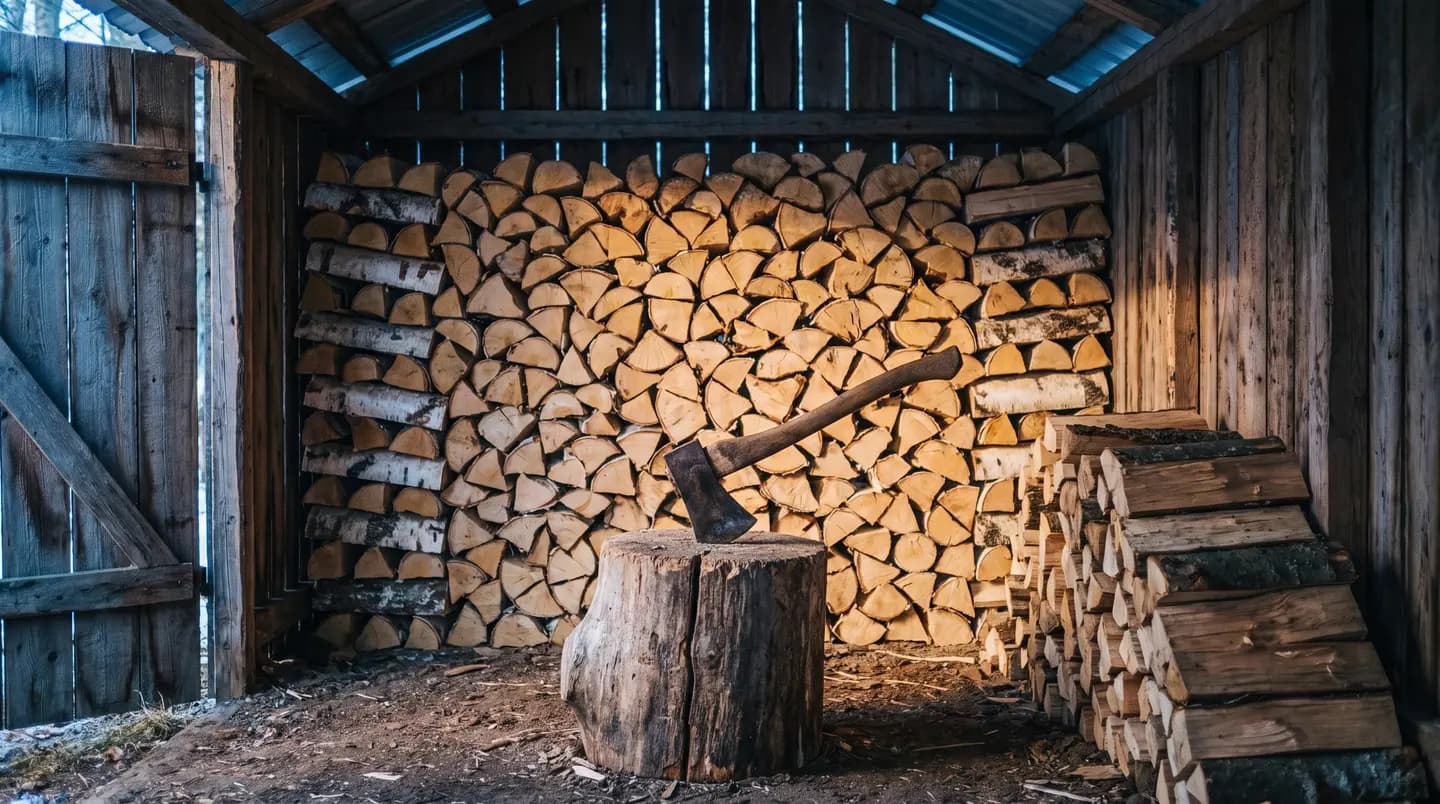
The woodshed behind Smokefall holds exactly two things: a year of seasoned birch and a small, almost ceremonial stack of fir. Birch is the engine; it burns hot, collapses into a dense coal bed, and holds that bed long enough to cook a whole service. Fir is the seasoning; a single split added late throws a resinous smoke that suits fish, squash, and anyone sitting downwind.
Why not the fancy woods
Apple and cherry prunings from the bench go in when the orchard offers them, and they are lovely, but you cannot run a restaurant on prunings. Oak barely grows here; importing it would make the menu a lie. Cooking with the forest you are actually in is the only wood philosophy that survives contact with a delivery bill.
Seasoning is the whole game
Every stick in the shed was split at least a year before it burns. Green wood spends its energy boiling its own water and pays you in creosote. If you take one thing from this post for your own fire: buy wood a year before you need it, stack it off the ground, and let the valley wind do the work.
Quick answers
- What wood does Smokefall cook with?
- Seasoned birch for the coal bed, a little fir late in the fire for its smoke, and orchard prunings when the bench offers them.
Hungry now? The board is chalked at 4.