The journal · · 5 min
Bread from a falling oven
We never light a fire for bread. The loaves bake in the heat left over from dinner service, in an oven on its long way down from 480 degrees.
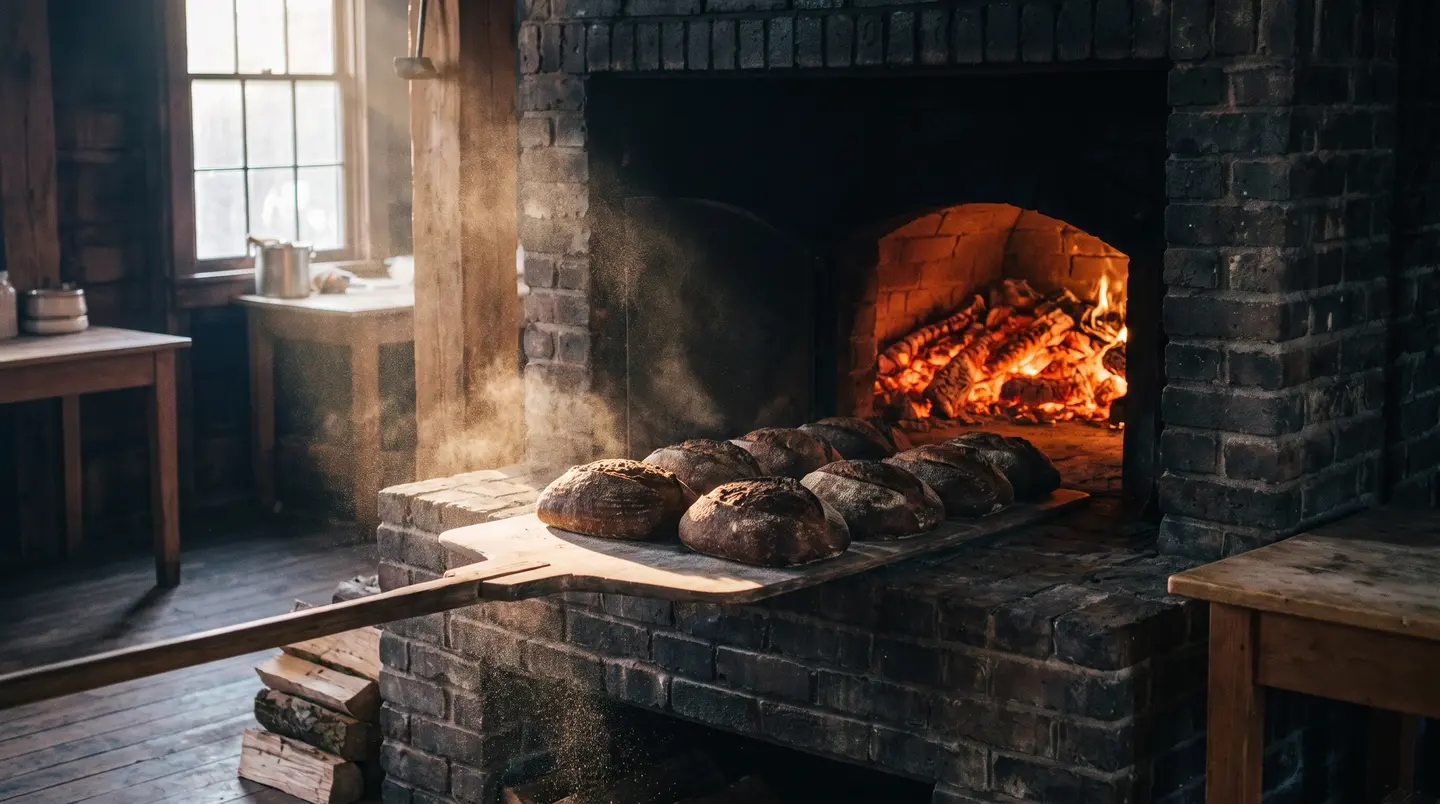
No fire is ever lit at Smokefall for bread. When dinner service ends, the hearth is banked and the brick holds somewhere near 480 degrees. By five the next morning it has fallen to the low 300s, which happens to be a perfect bread curve: ferocious at the start for spring, gentle at the end for the crumb. June builds the whole morning board on borrowed heat.
The falling-oven schedule
Flatbreads and anything shameless go in first, at the hot end. The red fife hearth loaves follow when the brick drops past 400. Galettes and morning buns ride the middle of the curve, and the last thing in is always the pan of eggs, set in an oven that by then is barely warmer than a summer porch.
What home bakers can steal from this
You do not have a two-tonne hearth, but the principle travels: bread likes falling heat. Start your oven higher than the recipe says, load the loaf, then turn it down twenty degrees twice during the bake. And use a flour with something to say. The stone-milled red fife from Redpoll Flour Co. tastes like the field it grew in, which is the whole argument for milling near where you bake.
The morning board runs Wednesday to Sunday, eight to eleven-thirty, and when the loaves are gone the board says so in chalk and means it.
Hungry now? The board is chalked at 4.